It is important to look at the history of futures and options when trying to understand why people trade them. A future contract makes sense when you are expecting the market prices to fall. But why do you trade in a future if you think the market prices are going to go up? Why not buy the underlying itself?
Futures contracts originated as a form of fixing prices for commodities. If you are a farmer, you know that you would be spending money, time and effort on the crops. But you don’t know what that crop will sell at when the harvest happens few months later.
Futures contracts started trading to protect and price-fix scenarios like this. As a farmer, you could look for a potential buyer who would agree to buy the crop at a fixed price on a future date. For you as the seller of the future contract, you get a fixed price, so you know how to control the expenses for your crop. As a buyer of the futures contract, you get hold of goods that are yet to arrive in the market. It is the same thing as a “pre-ordering” the latest mobile phone or the digital camera!
History of futures contracts before 1900s
According to some scholars, the history of futures contracts go back more than a few millennia. As per them, Hammurabi’s Code dated back to 1754BC, talks about some aspects of futures contracts.
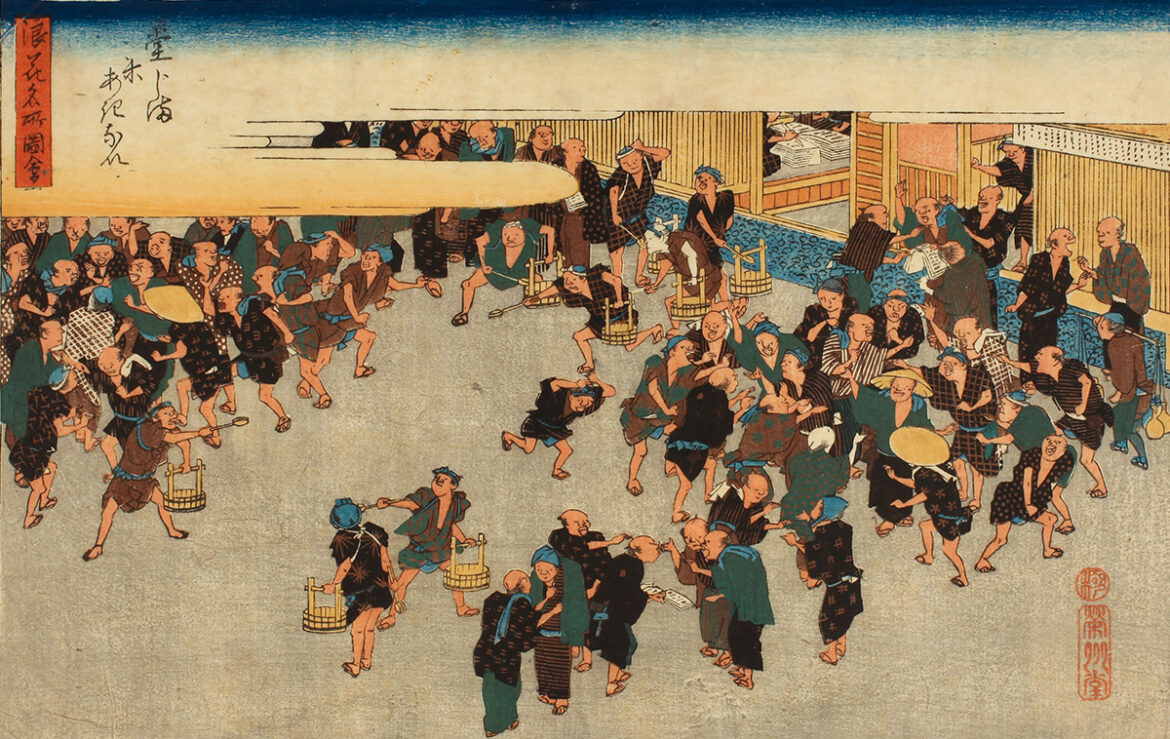
In Japan during the 1600s, rice was a major currency. Cities like Osaka became major market places where traders would meet and trade rice. In 1730, Shogun Yoshimune re-enacted the laws permitting futures trading in the town of Dojima, Rice traders and merchants would bargain and draw contracts to establish a price of the future harvests of rice. Some paintings done in the late 1700-mid1800 show how officials had to throw water on people to send them away because they were trying to negotiate prices even after the official trading times!
In early 19th century, metal traders in London were dealing with metal mines in Chile and South East Asia. The metal ores or the smelted metal would be delivered in London only a few months later via ship. These traders formed a trading company in 1877 which later became the London Metals Exchange.
CME is the world’s largest futures market today. One of its subsidiaries, Chicago Board of Trad, listed the contracts for future delivery of corn back in 1851. CME today deals in many forms of commodity futures dealing with agricultural, precious metals, industrial metals and crude oil and natural gas related underlying.
When we read through the history of futures, we can see how it is natural for an agricultural or a mining business to evolve futures trading. But when did the stock futures start?
History of stock futures
Amsterdam Stock Exchange is the world’s oldest stock exchange. When the VOC, one of the largest colonial powers at the time started listing their shares in the Amsterdam Stock Exchange, it quickly evolved a system of speculating on the future value of the company’s share price.
Today futures you can find futures on commodities, stocks, interest rates, currency exchange rates, bonds and pretty much anything you can think of. They have become a very important aspect in financial markets . Over the years many laws have been introduced to protect investors and traders of these instruments.
Forwards vs. Futures
Most of the earliest contracts that were discussed here are of a type called forward contracts. A forward contract is a customized contract between two parties. The date when the contract expires is specific to that contract, so is the quality of the underlying (think of an agricultural produce, you would have to say the type of the produce, the amount of humidity in it, the texture etc.). From one contract to another, these details could have changed. On the other hand a futures contract, is a standardized contract. Unlike forwards contracts, a future contract specifies a specific expiry date, a specific quality of the underlying etc. Trading in futures is easier because each future you trade is one-to-one same as another future of the same underlying and the expiry date.